

Written by Jennifer Walsh. Reviewed for technical accuracy by Shubham Dixit, Independent Expert in Email Forensics and Data File Conversion.
Shubham is an independent external reviewer and not an employee of PCDOTS.
Quick answer. Outlook stores your contacts in an address book you can export to a CSV or vCard file for backup or moving to a new account. On desktop Outlook the free Import and Export wizard does it, on Office 365 the web app has its own export, and a converter handles contacts trapped in a PST or OST file with no working Outlook.
On This Page
- Why Export Your Outlook Address Book
- Which Export Route Do You Need
- How Do You Export The Address Book On Desktop Outlook
- How Do You Export The Address Book From Office 365
- What If Your Contacts Are Stuck In A PST Or OST File
- How Do You Import The Address Book Back Into Outlook
- Where Is The Outlook Address Book File Stored
- The Methods Compared
- Frequently Asked Questions
Why Export Your Outlook Address Book?
Your Outlook address book is the list of contacts you have built up over years, and it is worth keeping a copy you control. Exporting it gives you a portable file you can use in several ways. You can keep a safe backup in case a profile breaks, move your contacts to a new computer or a new email account, carry them into another mail app, or hand a single contact to someone as a vCard. The export itself writes everything to a CSV or vCard file, and from there the contacts are yours to move around.
Which Export Route Do You Need?
Where your mail lives decides how you export. Desktop Outlook has the Import and Export wizard. Office 365 and Outlook on the web have their own export inside the People area. And if your contacts are locked inside a PST or OST file with no working Outlook profile, a converter reads the file directly. Pick the route that matches your setup.
Two free built in routes for desktop and web, plus a tool for contacts locked in a file.
How Do You Export The Address Book On Desktop Outlook?
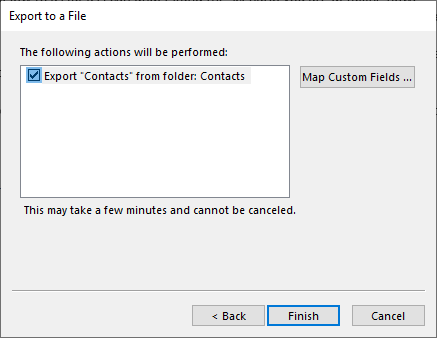
If you use the Outlook desktop app on Windows, the built in Import and Export wizard writes your contacts to a CSV file for free. This is the method most people want.
Exporting the Outlook address book with the built in Import and Export wizard.
Here are the steps with the screens.
Step 1. Open Outlook and go to the Import and Export wizard, found under File then Open and Export.
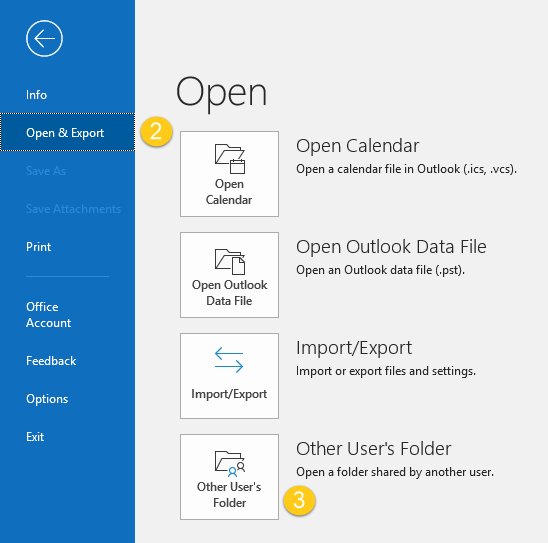
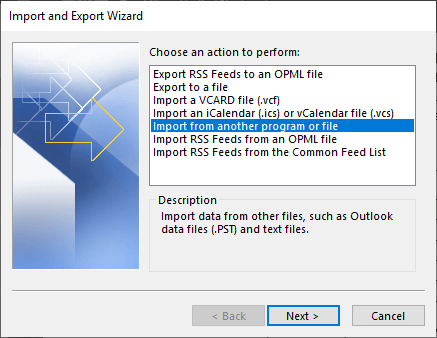
Step 2. Choose Export to a file.
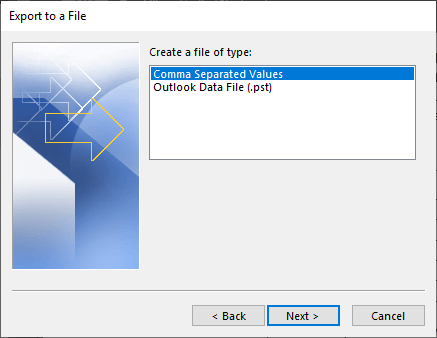
Step 3. Select the Comma Separated Values, the CSV, format.
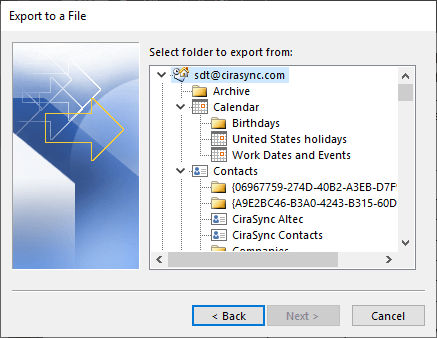
Step 4. Pick the Contacts folder you want to export.
Step 5. Set the save location and finish. Your address book is now a CSV file.
How Do You Export The Address Book From Office 365?
Plenty of people no longer open a desktop app at all. If your mail is on Office 365 or Outlook on the web, the export lives in the People area instead of a wizard. Open Outlook on the web and sign in, click the People icon in the left rail, then look for Manage or the toolbar and choose Export contacts. Pick all contacts or a single folder, click Export, and a CSV file downloads to your computer. It is the same portable CSV the desktop wizard produces, just reached a different way.
“People often confuse two things here. Your personal Contacts are yours to export. The Global Address List, the company wide directory, is not the same thing, and a normal user cannot export it from the menu. If you need names out of the GAL, add them to your contacts first, or ask an administrator to pull it.” Shubham Dixit, Email Forensics reviewer (draft, pending approval)
Both routes are free and both produce the same CSV. Use the one that matches where your mail lives.
What If Your Contacts are Stuck in a PST Or OST File?
The free methods both need a working Outlook or a live Office 365 account. The hard case is when you only have a file. An old PST from a backup, or an orphaned OST left behind by a profile that no longer opens, holds your contacts but gives you no wizard to run. This is where a converter earns its place. The PCDOTS Email Converter opens a PST or OST directly, with no Outlook profile required, and exports the contacts to CSV or to vCard, keeping every field rather than the limited set a quick export sometimes saves. It also handles a large address book in one pass. There is a free trial so you can confirm it reads your file before buying.
Step 1. Launch the converter after installing it.

Step 2. Add your Outlook PST or OST file.

Step 3. Preview the loaded contacts, then choose the export option.

Step 4. Pick CSV or vCard, set the destination, and start the export.

How Do You Import The Address Book Back Into Outlook?
An export is only half the round trip. To bring the contacts into a new Outlook profile or another account, open the same Import and Export wizard and choose Import from another program or file, then pick the CSV you saved and map it to the Contacts folder. In Gmail, open Google Contacts, choose Import, and upload the CSV. A vCard file is even simpler, since opening it adds the contact straight away. The file you exported is the same file you import, which is what makes the move painless.
Where Is the Outlook Address Book File Stored?
A common question is where Outlook keeps the address book on disk. Your contacts live inside your main Outlook data file, the PST or OST, not in a separate address book document. Outlook also builds a small offline address book with an OAB extension for quick lookups, but that is a cache, not your contacts, and it is not something you export or edit. When you want a usable copy of your contacts, you do not go hunting for a file, you run one of the exports above and let Outlook write a clean CSV or vCard for you.
The Methods Compared
The common ways to export the Outlook address book, side by side.
| Method | Best For | Watch Out For |
|---|---|---|
| Desktop wizard | A configured Outlook app, free CSV | Needs Outlook set up and open |
| Office 365 web | Mail on Outlook on the web, free | Personal contacts only, not the GAL |
| Converter | Contacts in a PST or OST, vCard, bulk | Free to try, full version is paid |
Frequently Asked Questions
How Do I Export My Outlook Address Book?
On desktop Outlook, open the Import and Export wizard, choose Export to a file, pick CSV, select the Contacts folder, and save. On Office 365, open the People area on the web and choose Export contacts.
How Do I Export The Address Book From Office 365?
Open Outlook on the web, click the People icon, choose Manage then Export contacts, pick all contacts or a folder, and a CSV file downloads.
Can I Export Outlook Contacts To vCard?
Yes. Outlook can save a single contact as a vCard, and a converter can export a whole address book to vCard or CSV from a PST or OST file.
Can I Export The Global Address List?
Not as a normal user. The Global Address List is the company directory, separate from your personal contacts. Add the entries you need to your contacts first, or ask an administrator to export it.
How Do I Export Contacts From A PST Or OST File Without Outlook?
Use a converter that opens the file directly. It reads the PST or OST with no Outlook profile and writes the contacts to CSV or vCard.
How Do I Back Up My Outlook Contacts?
Export the address book to a CSV or vCard file and store that file on your drive or cloud. To restore, import the same file back into Outlook.
Your Address Book, Ready To Move
Exporting your Outlook contacts turns a list locked inside an app into a file you can back up, move or import anywhere. On a configured desktop app the Import and Export wizard does it for free, on Office 365 the People area on the web does the same, and when your contacts are stuck in a PST or OST file a converter reads it directly. Run the export once, keep the CSV or vCard somewhere safe, and your address book is no longer tied to a single computer.


